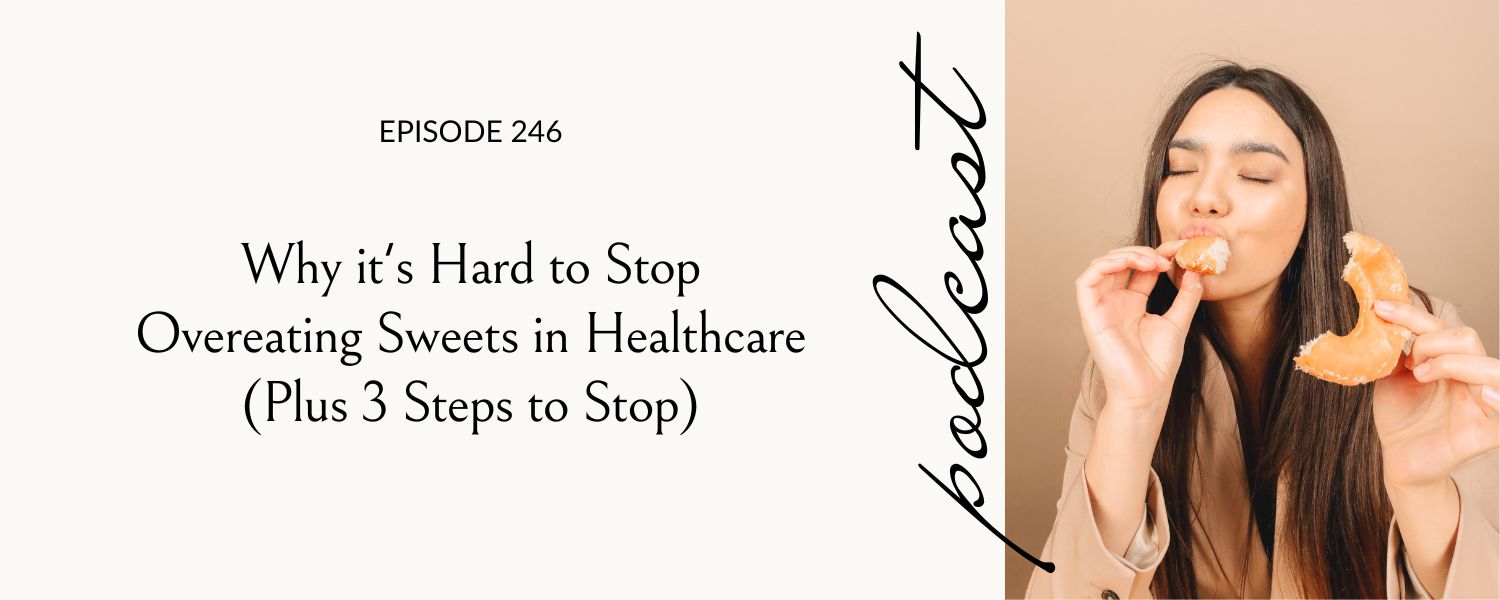
Why it’s Hard to Stop Overeating Sweets in Healthcare
In this episode of Eating Habits for Life, Kate Johnston explains why sweets feel so hard to resist during a healthcare shift, from environmental triggers to physical depletion to automatic stress patterns.
She shares 3 simple steps to stop overeating sweets at work, plus a client story showing how these shifts led to lasting change.
This episode speaks directly to nurses, physicians, PAs, NPs, and other women in health-related fields who feel out of control around sweets despite their discipline in every other area of life.
🎧 Listen with the player below. Or, keep scrolling for the readable version.
Listen Now:
Finally break free from overeating and emotional eating habits: Start with a Free Consult.
Follow the Show and listen to more episodes to start forming healthier eating habits.
Related Episodes:
- 🎙️How to Break Nighttime Eating Habits After a Long Day in Healthcare
- 🎙️Women in Healthcare: What’s at the Root of Overeating and Emotional Eating
Readable Version:
Why Can’t I Stop Eating Sweets At Work? Here’s What’s Really Going On
If you can’t stop eating sweets at work, it’s not a willpower problem. Your brain is doing exactly what it was designed to do, seeking out quick energy, comfort, and relief in an environment that hands you sugar all day long.
I’m Kate Johnston, and I’m an eating habits and weight loss coach for women in healthcare. I was a Physician Assistant for 15 years, so I understand this pattern from the inside because I lived it myself.
If you’ve ever wondered why you keep grabbing something sweet without even deciding to, this post will walk you through exactly why that happens and what to do instead.
Why can’t I stop eating sweets at work?
Sweets aren’t the problem. Your brain responding to what it’s been wired to seek out for survival, quick energy, comfort, pleasure, and relief, is the actual reason sweets feel so hard to resist.
Here’s the thing… your brain isn’t broken and sweets don’t have some kind of power over you. It’s simply doing what brains have always done, which is chase whatever feels good and available in the moment.
Am I addicted to sugar?
This is the question I hear most often, and the answer is almost always no. What feels like addiction is usually a brain that’s under nourished, under supported, and running on an automatic pattern it’s learned over time, not a chemical addiction to sugar itself.
I’ve worked with clients who were convinced something was chemically wrong with them, only to find they could completely break the pattern once we addressed what was actually driving it.
What do sweets actually give you?
Sweets provide a fast hit of things your body and brain are genuinely looking for during a demanding shift. That’s exactly why they’re so easy to reach for without thinking.
Sweets offer:
- Connection with coworkers, patients, or family
- Quick energy when you’re running on empty
- Comfort after a stressful moment
- A small moment of pleasure in an otherwise demanding day
- Relief from stress or exhaustion
Why is stress eating at work so common in healthcare?
Stress eating at work is common in healthcare because the environment constantly cues you toward sugar while also depleting your energy and emotional reserves. It’s not a coincidence, it’s the setup.
A few reasons this shows up so often:
The pattern becomes automatic. Busy shift, stressful moment, cookie, relief… your brain learns this sequence and starts running it without you even thinking about it.
Your environment is constantly triggering you. Patients bring cookies as thank you gifts, reps drop off treats, coworkers leave leftover birthday cake in the break room, and someone always has a secret candy stash in their desk.
You’re physically depleted. Long shifts with not enough real nourishment leave your brain looking for quick energy, and sugar delivers that fast.
You need a break from being on. Healthcare requires constant focus, emotional regulation, and putting your own needs on the back burner, so grabbing something sweet becomes a tiny moment that’s just for you.
What should I do instead of overeating sweets at work?
Rather than trying to white knuckle your way past the donuts, these 3 steps help you make sweets an intentional choice instead of an automatic one.
Build more support into your workday. Eat food that actually nourishes you during your shift, bring snacks you genuinely enjoy, stay hydrated, and take small breaks to breathe before heading back into a hard patient situation.
Stop making sweets the enemy. The more forbidden they feel, the more power they have over you. The goal isn’t to avoid sweets entirely, it’s to make an intentional decision about them.
Notice the moment before you eat. Pause and ask yourself, am I physically hungry, stressed, exhausted, or just looking for a break? Even if you decide to eat the cookie anyway, that’s now an intentional choice rather than an automatic one.
Quick answers to what you’re probably wondering
Why do I crave sweets so badly after a shift?
You’re likely physically depleted from not eating enough real food during your shift, so your brain is seeking fast energy and relief.
Is it bad that I eat sweets at work?
No. Sweets aren’t the enemy, and the goal is an intentional choice around them, not eliminating them completely.
How do I stop the automatic pattern of grabbing sweets without thinking?
Pause before you eat and name what’s actually going on, whether that’s hunger, stress, or needing a break, so the choice becomes conscious instead of automatic.
Ready to feel calm and in control around sweets, not just informed about them?
Understanding why this happens is the first step, and it’s also usually not enough on its own to change it. Real, lasting change happens when we work on the thoughts and habits underneath the pattern, together.
I’ve helped women in healthcare who tried every program out there, who were convinced they had no self control or were addicted to sugar, finally break patterns they’d had for decades.
If you’re ready to stop the shame spiral around sweets and finally feel calm, confident, and in control around food, book a free consult with me.
We’ll uncover what’s behind your sweets habit and any other eating habits you have, plus I’ll map out exactly how I’d help you break free from these eating habits and lose weight sustainably without relying on willpower.
Kate Johnston is an Eating Habits and Weight Loss Coach, host of the Eating Habits for Life podcast, and a former Physician Assistant with 15 years of clinical experience. She specializes in helping women in healthcare break overeating and emotional eating habits for good through mindset and strategy coaching in her 1:1 program, Lighter.

KATE JOHNSTON
Eating Habits & Weight Loss Coach
I help high-achieving women change their eating habits at the root to support the life & body they love.
Book a free consult for your roadmap to a healthy relationship with food and weight loss you can keep.