
Receive ‘Lighter’ Notes
Little notes in your inbox to help you break free from unhealthy eating habits.
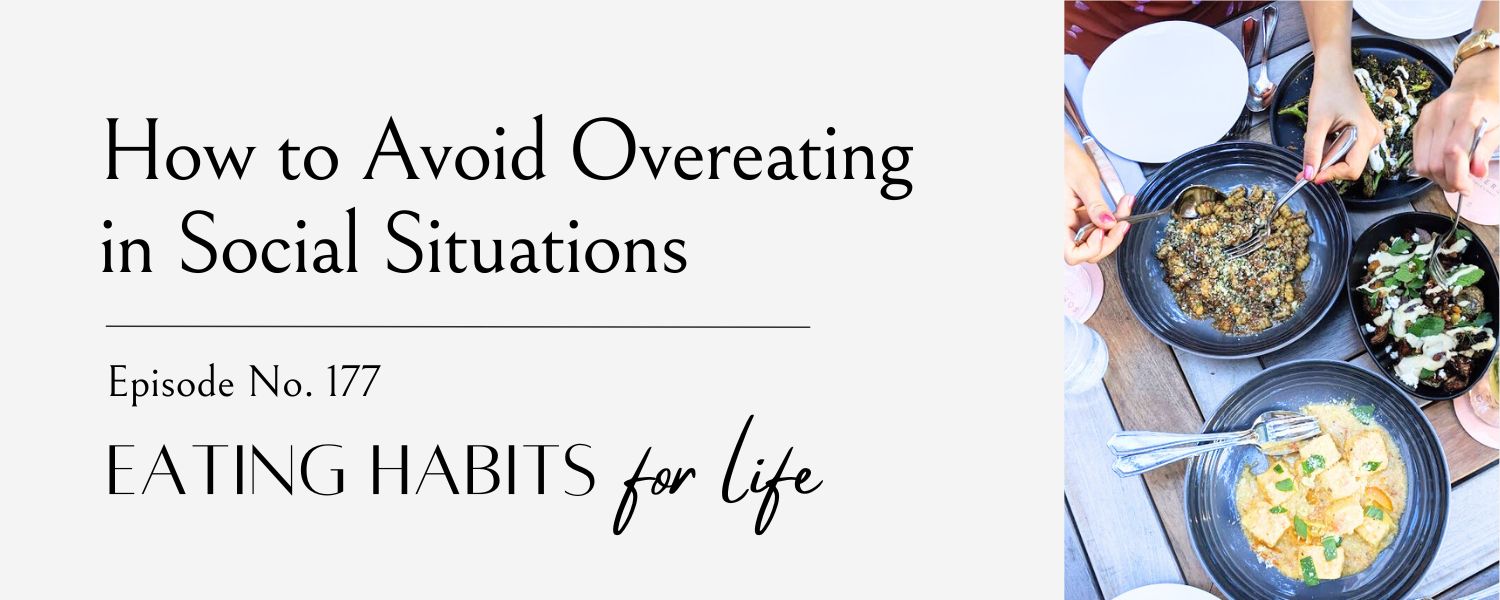
How to Avoid Overeating in Social Situations
Struggle with overeating at restaurants, parties, or social gatherings, even when you swear you’ll be “good”?
This episode breaks down the real reason you lose control around food in social situations (hint: it’s not a willpower issue).
Discover what’s really driving your overindulging, and how your brain’s habits are keeping you stuck.
If you want to feel in control around food, eat with confidence, and finally stop the food guilt spiral, this one’s for you.
🎧 Listen with the player below. Or, keep scrolling for the readable version.
Listen Now:
(If player is taking a while to load, just refresh the page.)
You’re ready to break free from unhealthy eating habits, lose weight and keep it off.
Your next step is to book a free consult with me.
Click the button to book now and start feeling in control with food and confident in your body.
Listen to This Next:
- 🎙️ Why You Keep Overeating (And What Actually Fixes It)
- 🎙️ The Fastest Way to Finally Feel in Control Around Food
Enjoying the Show?
Help others discover the podcast by leaving a quick rating or review! It makes a huge difference.
- Rate/review on Apple (iTunes) HERE
- Rate on Spotify HERE
Know someone who’d benefit?
📩 Send them this episode link!
📖Readable Version:
How to Avoid Overeating in Social Situations
Hi there and welcome to the Eating Habits for Life podcast.
Have you ever gone out to eat or to a get-together with friends, family or colleagues with every intention of ‘being good’… and then left the restaurant or party feeling stuffed, guilty, and asking yourself why you always do this?”
You’re not alone, and there’s a reason this happens that has nothing to do with willpower or discipline.”
Today, we’re not talking about portion tips or hacks. We’re going deeper into why this happens in the first place, and what’s really driving the behavior. Because you can’t change what you don’t understand.
This episode topic was inspired by someone I met last week, so if you’re listening, I think you might know who you are and thank you for being the inspiration for this episode that will help many.
Why it’s Not a Lack of Willpower or Self-Control
It can feel so confusing why some meals, you feel like you can do so well, eating healthy foods and not overeating to the point of feeling overly full.
You might question if you have a lack of willpower or no self-control when you’re around spreads of food or out to eat.
You might even have told yourself “I just love food too much” and that’s why you have a tough time when you’re around a lot of it.
And then you make that mean you’ll just always feel out of control and overeat when you’re in a social situation or out to dinner.
You may even feel like there’s peer pressure in those social settings. People offering you food. Everyone else eating and enjoying.
But here’s the thing, all of these reasons leave you feeling powerless, and they’re not even true.
There are other meals that you feel like you have control with, right? Or specific foods that you feel like you definitely have self-control with.
What’s Really Causing Overeating in Social Settings
So, what’s actually going on when you find yourself overeating in social situations or when eating out?
There are usually a few key factors at play….and emotions are a big one. That might surprise you, especially when those emotions are positive ones like fun, excitement, anticipation, or even the joy of connecting with others.
Just think: after a long, draining day or week, the idea of a night out or a fun meal feels like relief.
Your brain starts anticipating the reward of that experience, and dopamine (the “anticipation” hormone) gets released even before the food hits the table. That surge of feel-good chemicals creates a strong pull toward eating more.
Of course, it can also go the other way… negative emotions like social anxiety, discomfort, or even a little rebellious streak (especially if you’ve been restricting all week) can push you toward food too. That’s when it’s really easy to go into F-it mode.
And then there’s the environment: the sights, smells, the “you can order or eat anything” vibe. It all creates a perfect storm of temptation. Add in distractions like conversation, music, or just the general buzz of being out, and it becomes almost impossible to notice when you’re satisfied or even full.
Which brings us to the real kicker…why this overeating becomes a habit when you don’t want it to.
Why the Overeating Habit Forms
Ever notice how you can go into a social situation fully intending to eat moderately… and yet still end up overeating?
Here’s why that happens:
When your brain has paired a situation, like going out to eat or being with friends, with food enough times, it builds an automatic link. The brain starts to think:
“This is when we eat. This is when we get comfort or pleasure.”
So, even if the logical part of your brain (the one with all the best intentions) is saying, “I don’t want to overeat tonight,” your habit brain has already hit play on the old script.
That habit loop gets reinforced every time it’s followed, especially when eating brings relief, joy, or even just distraction.
And the more times it happens, the stronger that automatic pattern becomes, until it starts to feel like you’re not the one making the choice at all.
Leaving you feeling powerless, frustrated, weak, and maybe even broken, like there’s something wrong with you.
And then you might even notice weight gain or if you’re trying to lose weight, then difficulty losing it.
Making you feel even worse, right?
The Truth About Control
So your brain might be telling you that you’re out of control or that there’s something wrong with you. That’s a false belief though.
Overeating when eating out doesn’t mean you’re out of control. It means the primitive part of your brain, the habit brain, is doing exactly what it’s been trained to do from the beginning of time.
It’s doing what it thinks is keeping you happy and safe.
And then solution isn’t to try to restrict your calories the next day or during the week. It’s something else, something more powerful, and provides much more freedom.
The Solution to Avoid Overeating in Social Situations
The solution is to shift from your habit brain over to the intentional, more conscious and future-focused part of the brain.
And do it in a step-wise fashion, to make it easier.
It’s about awareness of any thoughts and emotions that are coming into play. Managing those thoughts and emotions, so they don’t lead to overeating.
It’s about bringing more awareness to what and how much you’re eating, and getting more satisfaction from every bite, so you don’t feel like you need as many bites.
It’s about decreasing environmental triggers and knowing how to create a simple boundary and saying “no, thanks” to someone who offers you more food.
And it’s also about self-compassion afterward if you did end up overeating something you didn’t want to. Because how you treat yourself after will determine your next actions. And your next actions will either break the habit or make it worse.
The Real Cost of Not Understanding This
Here’s what happens when you don’t get to the root of why overeating happens in social settings:
- You fall into the cycle of guilt, shame, and constantly “starting over on Monday.”
- You start avoiding social events or food experiences altogether — not because you don’t want to go, but because you don’t trust yourself when you do.
- You reinforce a painful belief: “I can’t be trusted with food,” which chips away at your confidence. Which then bleeds into other aspects of your life.
- And long-term? This leads to emotional burnout, mental fatigue, and continued struggles with weight and health, no matter how much willpower you try to summon up.
Shifting Your Social Overeating Identity
Imagine this:
You’re the kind of woman who goes out to dinner or parties and enjoys it — fully. Meaning before, during AND after.
You make food decisions you feel proud of in the moment, not just in hindsight.
You leave the table feeling energized, satisfied, and at peace, not heavy with regret.
That version of you? She’s not about perfection.
She’s about intention.
And it starts by understanding that this isn’t a willpower issue, it’s a brain habit issue.
And habits can be changed, one intentional choice at a time.
If this episode resonated with you, and you’re ready to stop repeating this pattern and start feeling confident with food — even at restaurants, work dinners or girls’ nights — book a free consult with me.
We’ll talk through your biggest challenges and what would help you finally shift this pattern for good. You’ll leave with clarity and more belief in yourself, plus anticipation of what’s possible for you in the near future.
Thanks so much for listening, take care and I’ll talk with you soon.
Ready to feel lighter?
A lighter body. Lighter relationship with food. Lighter emotional load. Lighter burden around eating.
A lighter way of living — for life.

KATE JOHNSTON
Eating Habits & Weight Loss Coach
I help women who are successful everywhere else, break eating habits like overeating and emotional eating, and build habits that support the life and body they love.
Book a free consult for clarity, support, and a personalized strategy to achieve your goals.