
Hi, I’m Kate — I help women in healthcare lose weight sustainably, without willpower.
I’ll show you how in a free consult, which is a compassionate and safe space.
Hi, I’m Kate — I help women in healthcare lose weight sustainably, without willpower.
I’ll show you how in a free consult, which is a compassionate and safe space.
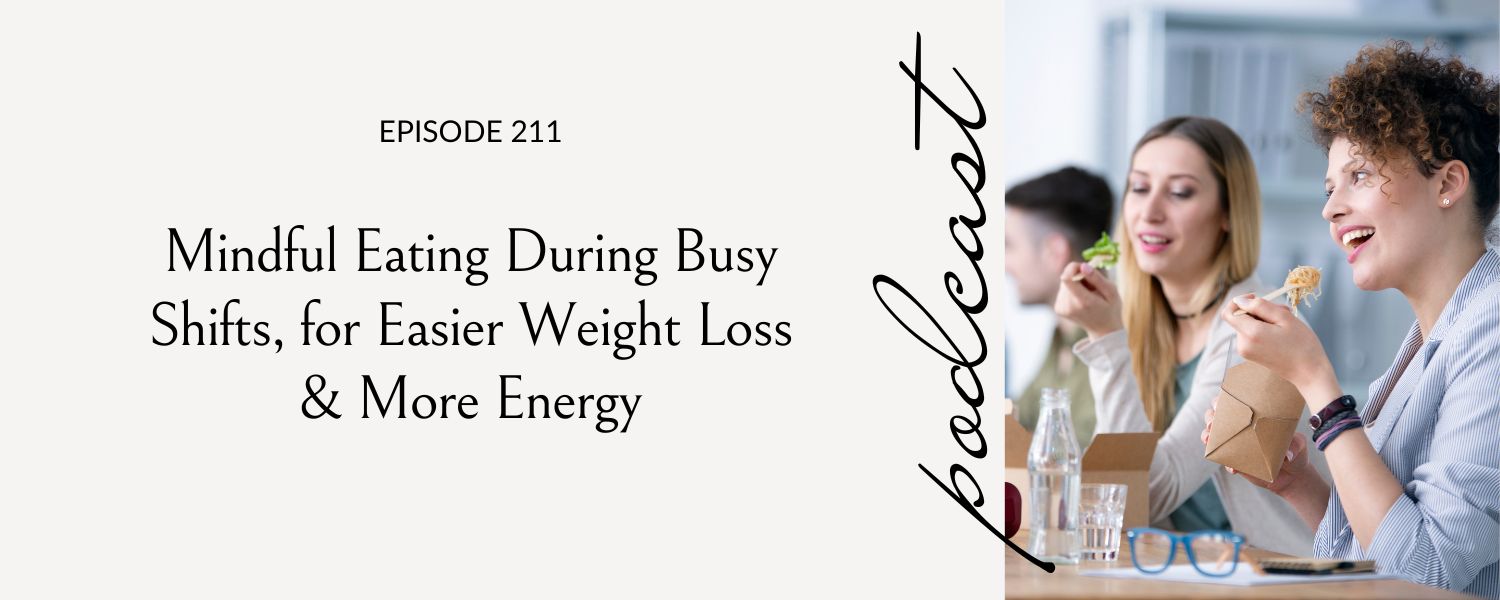
Mindful Eating During Busy Shifts, for Easier Weight Loss and More Energy
If you work long hours or juggle on-call weekends and you’re feeling like food is an afterthought, impulsive, or mindless, this episode is for you.
I’m sharing 5 practical steps to eat mindfully even when your schedule is chaotic — so you can feel calm, energized, and actually enjoy your meals.
And have a MUCH easier time losing weight.
You’ll also learn what to do when eating quickly or grabbing convenient food instead of eating mindfully (because let’s be honest, that happens and it’s totally normal).
- By the end of this episode, you’ll have simple tools to:
- Reduce overeating and emotional eating
- Support steady energy throughout your healthcare shift
- Strengthen awareness of hunger and fullness cues
- Feel calmer, more grounded, and mindful around food
Plus, I bust the biggest myth: mindful eating doesn’t mean “perfect” or “healthy” food.
💡It’s about being present, connected, and intentional with what and how you eat, even during your busiest days.
Whether you’re in healthcare or a similarly demanding field, this episode gives you realistic strategies you can use immediately to care for yourself while caring for others.
Tune in and discover how small, mindful pauses can transform not just your eating, but your energy, focus, and confidence, during even the most tiring or stressful shifts.
🎧 Listen with the player below. 👇🏼Or, keep scrolling for the readable version.
P.S. 🤍If this episode feels like it was describing you…
I work 1:1 with women in healthcare through a coaching program designed to help you feel calm, confident, and in control around food — without deprivation or more willpower.
The first step is a free consult to explore what’s actually driving your eating habits and see if working together is a fit.
Listen Now:
(If player is taking a while to load, just refresh the page.)
Yes, You Can Lose Weight Without Willpower.
Imagine eating what feels good to your body, and trusting yourself around your favorite foods. Losing weight without forcing anything. Wanting to check yourself out in the mirror, and feeling confident.
You can have this, even if it feels far away right now. And even in a demanding career like healthcare.
Take the first step now with a free consult.
This is a safe and compassionate space for me to learn about you, and share my process that creates sustainable weight loss for you.
Click the button below to pick and date and time to meet.
Listen to This Next:
- 🎙️Women in Healthcare: What’s at the Root of Overeating and Emotional Eating
- 🎙️Mindful Eating for Weight Loss
Enjoying the Show?
Help others discover the podcast by leaving a quick rating or review! It makes a huge difference.
- Rate/review on Apple (iTunes) HERE
- Rate on Spotify HERE
Know someone who’d benefit?
📩 Send them this episode link!
📖Episode Transcript (Easy-to-Read Version):
Mindful Eating During Busy Shifts, for Easier Weight Loss and More Energy
If you work in healthcare… long hospital shifts, back-to-back patients, on-call weekends, then you already know how easy it is for food to become an afterthought.
Meals get rushed. Snacks happen between tasks. Sometimes you don’t eat at all… until you’re suddenly starving.
In this episode, you’ll learn 5 practical ways to practice mindful eating during busy shifts, so you can feel calm, energized, and more in control around food, even in a high-demand environment.
We’ll also cover what to do if you end up eating quickly or grabbing convenience food (because that’s normal, too).
What Is Mindful Eating (And What It’s Not)?
Before we go further, let’s clear up a common misconception:
Mindful eating does NOT mean eating “healthy” foods.
At its most basic level, mindful eating means:
- Eating without distractions
- Being present with your food
- Staying connected to your body’s hunger and fullness cues
When you take it a step further, it’s about eating intentionally rather than reactively.
And that’s especially important in healthcare settings.
Why Mindful Eating Feels Impossible for Healthcare Professionals
If you’re a nurse, PA, physician, therapist, or healthcare provider or worker of any kind, your work is physically, mentally, and emotionally demanding.
You are trained to:
- Put patients first
- Solve urgent problems
- Stay focused under pressure
- Keep the system running
So of course food gets pushed to the bottom of the list.
Your brain operates in “go mode” all day. In that state:
- Meals are rushed
- Hunger cues get ignored
- Eating becomes reactive
- Overeating happens later
And none of that means you lack discipline.
It means your nervous system is in survival mode.
As a former Physician Assistant for 15 years (12 of those in the OR) I understand this firsthand. Long surgeries, unpredictable schedules, call weekends, eating peanut butter and saltines between cases… not exactly calm, intentional meals.
So if mindful eating feels unrealistic during shifts, that’s completely normal. But it is possible, with small adjustments.
Reactive Eating vs. Intentional Eating
Reactive eating looks like:
- Grabbing whatever is available
- Eating quickly without awareness
- Skipping meals, then overeating later
- Eating from stress or exhaustion
Intentional eating means:
- Making a conscious decision to eat
- Creating even a brief pause
- Paying attention to your body
- Choosing from awareness rather than urgency
Intentional eating doesn’t have to be perfect. It just requires awareness.
Benefits of Mindful and Intentional Eating During Busy Shifts
When practiced consistently, mindful eating can:
- Reduce emotional eating triggered by stress
- Decrease overeating by improving fullness awareness
- Support steady energy throughout long shifts
- Improve satisfaction with food
- Support healthy weight management over time
- Calm your nervous system in high-stress environments
Now let’s talk about how to actually do this when time is limited.
5 Practical Steps for Mindful Eating During Busy Shifts or On-Call Weekends
1. Choose the Best Time You Can to Sit Down and Eat
Even if it’s just 5–10 minutes, look for the most realistic pause in your schedule.
You don’t need a perfect lunch break.
You need a small window of intention.
Why This Works:
- Gives your nervous system a rest
- Signals safety instead of urgency
- Makes it easier to notice hunger and fullness
- Reduces overeating later in the day
Even a short, seated meal changes the experience dramatically.
2. Pause, Breathe, and Assure Yourself You Have Time
Before taking your first bite, pause.
Take 2–3 slow breaths and tell yourself:
“I have time to eat. I’m allowed to eat.”
This sounds simple—but it shifts your body out of stress mode.
Why This Works:
- Reduces tension and cortisol
- Improves digestion
- Increases satiety awareness
- Helps you feel calmer instead of frantic
When your nervous system relaxes, your body can actually register nourishment.
3. Eliminate Distractions While You Eat
Put your phone away.
Step away from your computer.
If possible, move away from clinical noise and conversations.
Let your attention be on the food.
Why This Works:
- Increases satisfaction (often with less food)
- Reduces mindless overeating
- Helps your brain “log” the meal
- Decreases the urge to keep grazing later
When your brain fully registers a meal, cravings later in the shift often decrease.
4. Notice Your Food (Engage Your Senses)
Pay attention to:
- Color
- Smell
- Texture
- Taste
You can even briefly think about where the food came from and the effort involved in preparing or growing it.
One client of mine bought vegetables from local farm stands. She would take a moment to think about the care the farmer put into growing them. That simple pause increased her appreciation—and her satisfaction.
Why This Works:
- Naturally slows down eating
- Enhances enjoyment
- Increases fullness awareness
- Regulates your nervous system through sensory grounding
When you connect with your environment (even your food), your nervous system feels safer and more regulated.
5. Check In Halfway Through
Halfway through your meal or snack, pause.
Ask yourself:
- Am I still hungry?
- Am I satisfied?
- What would feel best right now?
Then decide intentionally how much more to eat.
Why This Works:
- Reduces overeating
- Strengthens intuitive eating skills
- Builds confidence and self-trust
- Reinforces connection to your body
This is how you shift from autopilot to awareness.
What to Do If You Ate Quickly or Grabbed Convenience Food
Let’s be realistic.
There will be days when:
- You eat standing up
- You inhale your food in five minutes
- You grab whatever is available
- Mindful eating just doesn’t happen
That’s normal in healthcare.
Here’s what to do instead of spiraling:
1. Notice Without Shame
Call it what it is: reactive eating. Not failure, and it certainly doesn’t mean anything negative about you as a person.
2. Pause Mid-Bite (If Possible)
Even one breath reconnects you to your body.
3. Reframe the Moment
You’re working in a high-demand environment. You’re human.
4. Reset at the Next Opportunity
The next snack or meal is a fresh start.
Why This Matters:
- Prevents guilt-driven overeating
- Stops emotional eating spirals
- Maintains trust with your body
- Reinforces resilience rather than perfectionism
One rushed meal does not undo progress.
Why Mindful Eating Matters for Energy, Weight, and Emotional Eating
Even small mindful pauses can:
- Improve focus and energy for the rest of your shift
- Reduce stress-triggered cravings
- Decrease binge–restrict cycles
- Support healthy weight management
- Increase confidence around food
- Help you feel calm instead of chaotic
For healthcare professionals, this isn’t just about food.
It’s about self-regulation in an intense environment.
Support for Healthcare Professionals: Eat with Intention (1:1 Coaching)
These are the exact skills I teach inside my 1:1 coaching program, Eat with Intention.
We focus on:
- Feeling calm and confident around food
- Reducing emotional and reactive eating
- Rebuilding trust with hunger and fullness cues
- Creating practical strategies that work during long shifts and on-call weekends
- Supporting sustainable weight loss without rigid dieting
If you’re ready to feel empowered around food instead of rushed, stressed, or reactive, you can book a free consult to talk through your goals and see how personalized coaching can support you.
Final Thoughts: Mindful Eating Is Possible (Even on Busy Shifts)
This isn’t about perfection.
It’s about creating small, intentional pauses in the middle of demanding work.
Even during long shifts and on-call weekends, you deserve to:
- Feel nourished
- Feel calm
- Feel satisfied
- Feel in control
You spend your days caring for others.
You’re allowed to care for yourself, too.
You CAN lose weight and keep it off.
By breaking habits like overeating and emotional eating, and thinking like the person who keeps it off naturally.
The first step is a free consult to discover how.

KATE JOHNSTON
Eating Habits & Weight Loss Coach
I help women in healthcare and perfectionists break their toughest eating habits like overeating and emotional eating, and lose weight sustainably.
Discover how by booking your free consult below.