Hi, I’m Kate — I help women in healthcare lose weight sustainably, without willpower.
I’ll show you how in a free consult, which is a compassionate and safe space.
Hi, I’m Kate — I help women in healthcare lose weight sustainably, without willpower.
I’ll show you how in a free consult, which is a compassionate and safe space.
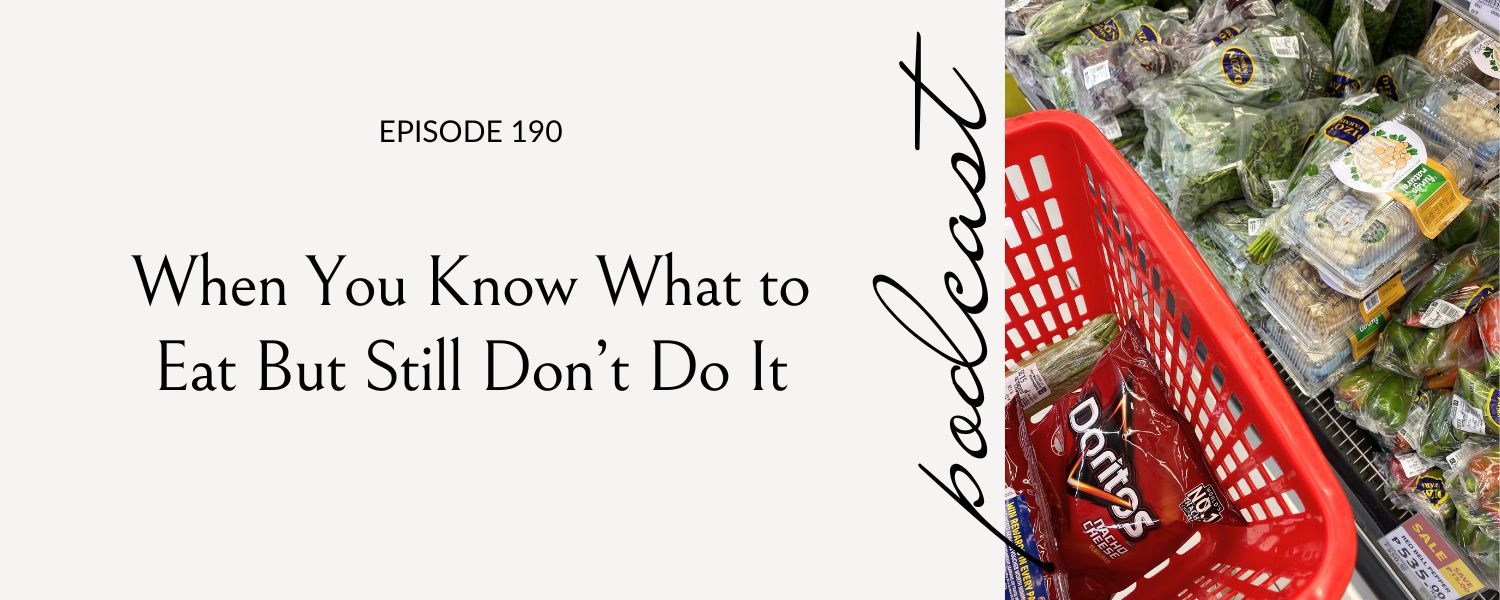
When You Know What to Eat, But Still Don’t Do It
Ever think, “I know what I should eat… why can’t I just do it?” You’re not alone.
In this episode, I’m diving deep into why knowing what to eat isn’t enough for weight loss or healthy eating. And how emotional eating, stress eating, and automatic food habits override logic every time.
You’ll learn what’s really happening in your brain when you eat on autopilot, the thoughts that keep you stuck, and how I help clients finally rewire those habits so they can eat with intention, lose weight, and feel calm and in control around food.
If you’re ready to stop the cycle of “knowing but not doing” and start changing your eating habits for good, this episode is for you.
🎧 Listen with the player below. 👇🏼Or, keep scrolling for the readable version.
P.S. 🤍If this episode feels like it was describing you…
I work 1:1 with women in healthcare through a coaching program designed to help you feel calm, confident, and in control around food — without deprivation or more willpower.
The first step is a free consult to explore what’s actually driving your eating habits and see if working together is a fit.
Listen Now:
(If player is taking a while to load, just refresh the page.)
Yes, You Can Lose Weight Without Willpower.
Imagine eating what feels good to your body, and trusting yourself around your favorite foods. Losing weight without forcing anything. Wanting to check yourself out in the mirror, and feeling confident.
You can have this, even if it feels far away right now. And even in a demanding career like healthcare.
Take the first step now with a free consult.
This is a safe and compassionate space for me to learn about you, and share my process that creates sustainable weight loss for you.
Click the button below to pick and date and time to meet.
Listen to This Next:
- 🎙️ You’ve Tried Tracking and Portion Control and It’s Not Working – Here’s Why
- 🎙️ Yes, You Can Break Your Bad Eating Habits – Here’s How
Enjoying the Show?
Help others discover the podcast by leaving a quick rating or review! It makes a huge difference.
- Rate/review on Apple (iTunes) HERE
- Rate on Spotify HERE
Know someone who’d benefit?
📩 Send them this episode link!
📖Readable Version:
When You Know What to Eat, But Still Don’t Do It
Ever think, “I know what I should eat… so why can’t I just do it?”
You’ve probably read all the nutrition articles, maybe even meal-prepped or planned out your week — and then the plan just… falls apart.
It’s not because you’re lazy or lack discipline. It’s because you’re fighting something much deeper: your habits — patterns wired into your brain that override logic, especially when you’re tired, stressed, or overwhelmed.
As someone who’s been there myself, I get it.
My Story: When Knowing Better Still Didn’t Mean Doing Better
Back when I was working as a Physician Assistant, I knew what to eat. I even grew up eating nourishing meals my mom made. I exercised, worked an active job in Orthopedic Surgery…. and still, I was gaining weight.
Why? Because I wasn’t looking at my habits.
I was constantly reaching for convenience: pretzels, Cheez-Its, peanut butter granola bars, cereal for dinner, anything quick that gave me relief after a long day.
My brain had learned to want those foods. They brought comfort and helped me unwind.
That’s exactly what so many women experience, especially career women juggling busy, demanding lives.
In this post, I’ll break down:
- Why knowing what to eat isn’t enough
- What’s happening in your brain when you eat on autopilot
- The thoughts that keep you stuck
- And how I help my clients change this for good through coaching
The Real “Problem”
Most of my clients don’t have a knowledge problem, and I bet you don’t either.
You already know what’s healthy…. vegetables, lean proteins, whole grains, nuts, fruit. You know what’s less nourishing too….. chips, candy, fried foods.
You could probably write a healthy meal plan right now.
The problem is that knowing what to eat and actually doing it are two very different things.
The logical part of your brain knows what to do.
But the emotional, habit-based part doesn’t care about logic. It just wants comfort or relief.
That’s why when you’re tired, stressed, or overwhelmed, you might find yourself reaching for food almost automatically.
You’re not weak. You’re not broken.
You’re fighting your brain’s habit loops.
And you can’t “try harder” to overcome them, you have to retrain them.
What’s Actually Happening in Your Brain
Every time you eat to feel better (whether from stress, boredom, or fatigue) your brain gets a small hit of relief.
That relief feels good, so your brain remembers it.
It learns:
“When I feel stressed, food helps me feel better.”
And that’s how a habit loop forms:
Cue → Craving → Behavior → Reward.
Example:
- Cue: You get home from work, exhausted.
- Craving: “I need something to take the edge off.” (A thought that creates the feeling of a craving or urge)
- Behavior: You grab a snack or pour a glass of wine.
- Reward: You feel a bit of relief.
Repeat that enough times, and your brain wires it in as an automatic response.
The good news?
If your brain learned that pattern, it can learn a new one.
That’s the heart of habit work, teaching your brain new ways to find relief that actually support your goals and health.
Thoughts That Keep You Stuck
Habits are only half the story.
The other half? Your thoughts — the ones swirling around food all day long.
Ever think things like:
- “I deserve this treat.”
- “I’ll start again tomorrow.”
- “Just one bite won’t hurt.”
These thoughts sound logical, but they’re your brain’s way of keeping the reward cycle alive.
Then comes the self-talk afterward:
- “I have no willpower.”
- “I’ll never be able to stick with this.”
- “What’s wrong with me?”
Those thoughts don’t motivate you. They make you feel discouraged and ashamed. And when we feel bad, what do we do? Look for comfort… usually from food.
That’s how the emotional eating cycle continues:
Cue → Craving → Eating → Relief → Thought (about what happened) → Shame → Repeat.
But once you start to notice those thoughts instead of believing or acting on them, you can interrupt the loop.
You can build curiosity instead of judgment.
And that’s when eating begins to feel easier, calmer, and more natural.
How I Help Clients Break This Cycle
So how do you actually change this?
Here’s what I do with my clients inside my 1:1 coaching program, Eat with Intention.
1. Build Awareness
We start by simply noticing what’s happening — without judgment.
What are you eating, when, and why?
What thoughts or emotions show up before and after?
Just observing creates space between you and your habits. That’s where change begins.
2. Focus on Small Wins
Big changes rarely last because the emotional part of your brain resists them.
Instead, we focus on small, consistent shifts, and celebrate them.
Your brain needs those small wins to feel rewarded and stay motivated.
3. Reconnect with Hunger and Fullness
We work on tuning back into your body’s natural hunger and fullness cues. So you’re eating when you’re hungry, stopping at “enough.”
This retrains your brain and body to work together again.
4. Manage Thoughts and Emotions
We uncover and reframe the thoughts that trigger overeating.
We find new thoughts that feel true and helpful.
You also learn to manage emotions in healthy, effective ways, so food no longer feels like your only source of relief.
5. Set Up Your Environment for Success
We make practical tweaks like keeping tempting snacks out of sight or bringing enough food to work so you’re not starving by 5 p.m.
6. Shift from Impulsive to Intentional Eating
This is the ultimate transformation.
You move from eating on autopilot to eating with intention.
You become the one in charge, not your habits or your emotions.
That’s why I call my program Eat with Intention. Because when you eat intentionally, you’re calm, confident, and in control. You’re back in the driver’s seat when it comes to decisions around food, not the habit brain.
You Can Have This Too
Today, I no longer feel controlled by food.
I still eat cookies and pasta, but only when I’m truly hungry, and without guilt.
Food isn’t my stress relief anymore… it’s just food.
And that’s what’s possible for you, too.
If you’re ready to finally stop feeling like you “know what to do but can’t do it,” I’d love to help.
✨ Book a free consultation with me — we’ll talk about what’s behind your eating habits, what’s keeping you stuck, and the process that will help you create calm, lasting change.
You’ll leave the call feeling heard, supported, hopeful and with a lot of clarity… whether or not you decide to work with me.
You CAN lose weight and keep it off.
By breaking habits like overeating and emotional eating, and thinking like the person who keeps it off naturally.
The first step is a free consult to discover how.
KATE JOHNSTON
Eating Habits & Weight Loss Coach
I help women in healthcare and perfectionists break their toughest eating habits like overeating and emotional eating, and lose weight sustainably.
Discover how by booking your free consult below.