Hi, I’m Kate — I help women in healthcare lose weight sustainably, without willpower.
I’ll show you how in a free consult, which is a compassionate and safe space.
Hi, I’m Kate — I help women in healthcare lose weight sustainably, without willpower.
I’ll show you how in a free consult, which is a compassionate and safe space.
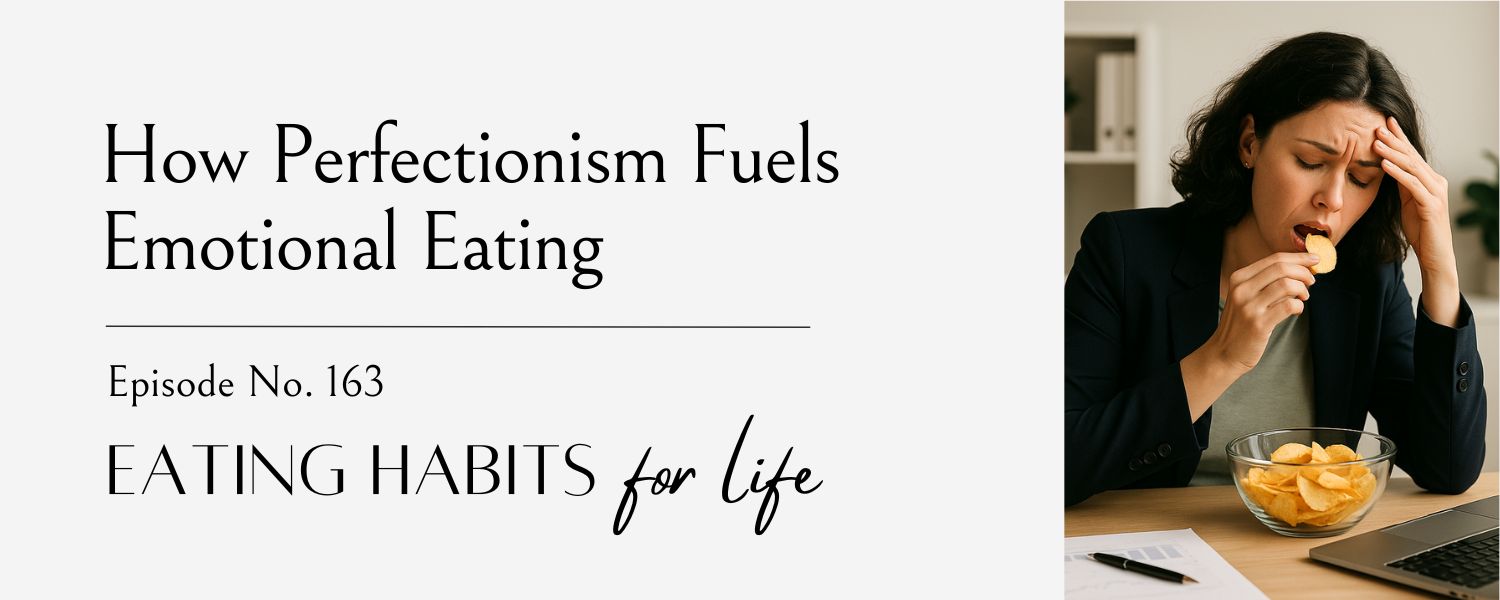
How Perfectionism Fuels Emotional Eating
If you’ve ever felt like you have to “do it all perfectly” with food, work, or life, or else you’ve failed… you are not alone.
In this empowering episode, we uncover how perfectionism creates emotional pressure that often leads to emotional eating… and how to finally break that cycle.
You’ll walk away with:
✨ A new, more compassionate understanding of perfectionism
✨ Insight into why high-achieving women are so prone to it
✨ Simple shifts that free you from food guilt and all-or-nothing thinking
You don’t have to be perfect to feel at peace. Listen now below.
🎧 Listen with the player below. 👇🏼Or, keep scrolling for the readable version.
P.S. 🤍If this episode feels like it was describing you…
I work 1:1 with women in healthcare through a coaching program designed to help you feel calm, confident, and in control around food — without deprivation or more willpower.
The first step is a free consult to explore what’s actually driving your eating habits and see if working together is a fit.
Listen Now:
(If player is taking a while to load, just refresh the page.)
Stay on track with eating habits and weight loss – Subscribe to the Show!
Yes, You Can Lose Weight Without Willpower.
Imagine eating what feels good to your body, and trusting yourself around your favorite foods. Losing weight without forcing anything. Wanting to check yourself out in the mirror, and feeling confident.
You can have this, even if it feels far away right now. And even in a demanding career like healthcare.
Take the first step now with a free consult.
This is a safe and compassionate space for me to learn about you, and share my process that creates sustainable weight loss for you.
Click the button below to pick and date and time to meet.
More Episodes to End Emotional Eating:
Enjoying the Show?
Help others discover the podcast by leaving a quick rating or review! It makes a huge difference.
- Rate/review on Apple (iTunes) HERE
- Rate on Spotify HERE
Know someone who’d benefit?
📩 Send them this episode link!
Read the Episode Transcript:
How Perfectionism Fuels Emotional Eating (Especially for High-Achieving Women)
Do you ever feel like if you’re not doing everything perfectly…with your eating, your work, your life… you’re somehow failing? Like one slip-up with food means you’ve ruined it all?
You’re not alone.
And more importantly, you’re not broken or lacking willpower. There’s something deeper going on.
Today, we’re digging into perfectionism, specifically how it fuels emotional eating, especially for high-achieving women like you.
If you’ve ever ended a long, pressure-filled day and found yourself reaching for food for relief, or felt intense guilt over one small choice, you’re going to feel so seen today.
We’re going to connect the dots between:
- What perfectionism really is (and isn’t)
- Why it’s so common for smart, capable career women
- How it creates emotional pressure that leads to emotional eating
- And, most importantly, how to start breaking the emotional eating cycle in a compassionate, realistic way.
So if you’re tired of feeling stuck in the perfectionism-emotional eating loop, you’re in the right place. Let’s dive in.
What is Perfectionism? (Is This You?)
First, let’s talk about what perfectionism really is, and what it’s not.
Perfectionism isn’t just “having high standards.”
It’s when your self-worth becomes tied to your performance.
It’s the belief that “if I don’t do this flawlessly, I’ve failed.”
You might recognize it if you:
- Feel like anything less than 100% effort or results means you’re not good enough
- Constantly replay small mistakes in your mind
- Feel paralyzed by the fear of messing up
- Beat yourself up when things don’t go exactly how you planned
At its core, perfectionism stems from a fear of judgment, rejection, or not being enough.
It often develops as a coping mechanism, maybe from childhood, school, or your professional environment… where you learned that “being perfect” was the safest way to get approval, acceptance, or success.
And here’s the key: there’s a huge difference between healthy high standards and perfectionism.
- Healthy high standards motivate you and allow flexibility.
- Perfectionism demands flawlessness and punishes you emotionally if you fall short.
When perfectionism is running the show, it creates constant emotional tension, and that tension eventually needs relief.
I mean, think about your body when you’re trying to get something to be perfect. It literally tenses up and you might even feel an uncomfortable energy within you.
That’s where emotional eating sneaks in – to give you relief of those feelings.
How Perfectionism Fuels Emotional Eating
When you live under constant self-imposed pressure, it’s exhausting.
Even if you seem outwardly successful, inside you might feel anxious, stressed, or just never quite good enough.
And food can feel like:
- A quick escape
- A way to soothe yourself after a hard day
- A brief moment where you’re not judging yourself
In fact, many high-achieving women use food as an emotional outlet, even if they don’t realize it at first.
Here’s how the cycle usually looks:
- Set unrealistically high expectations for yourself, whether with eating, work, or life.
- Feel stress, anxiety, or disappointment when reality doesn’t match perfection.
- Reach for food for comfort, distraction, or temporary relief.
- Feel guilt or shame afterward… and double down on “doing better” tomorrow, often reinforcing even more rigid expectations.
And around and around it goes.
Notice: It’s not a lack of willpower.
It’s an emotional system trying to protect you from the constant pressure perfectionism creates.
Why it’s Common for High-Achieving Women
If you’re listening to this, there’s a good chance you’re a smart, driven, capable woman.
Maybe you’re a healthcare professional, an executive, or just someone who’s always pushed herself to excel.
High-achievers often develop perfectionistic patterns because:
- They were rewarded for performance early on (grades, promotions, achievements)
- They’re used to being “the responsible one”
- They face constant external pressures—whether from work, family, or society
- They internalize that success equals worth
And emotional eating becomes the hidden, socially “acceptable” coping strategy that no one talks about.
But there’s a better way.
How to Start Breaking the Perfectionism-Emotional Eating Cycle
Let’s talk about real, actionable steps.
Here’s how you start breaking free:
1. Recognize the Pattern
Begin noticing when perfectionistic thoughts show up.
Catch yourself thinking, “I have to be perfect or I’ve failed.”
Awareness is everything.
Example:
If you eat something off-plan, instead of spiraling into “I blew it,” notice the thought and pause: “Hmm, that’s my perfectionism talking.”
2. Redefine Success
Challenge the idea that success means doing it perfectly.
What if success was showing up, being consistent, and learning from mistakes instead?
A powerful reframe (and I know you’ve heard this one):
“Progress, not perfection.”
3. Build Self-Compassion
Self-compassion isn’t about letting yourself off the hook.
It’s about acknowledging that being human means being imperfect…and that’s okay. You’re not a robot… actually robots aren’t even perfect, so why expect yourself to be perfect?
Talk to yourself like you would to a friend:
“One choice doesn’t define me. I can course-correct without shame.”
4. Create Emotional Outlets That Aren’t Food
Find other ways to process emotional pressure: journaling, movement, deep breathing, reaching out to someone safe.
Build a toolkit that supports your emotional health outside of food.
Key Takeaways for Perfectionists Who Emotionally Eat
If this resonated with you today, please know this:
✨ You are not alone.
✨ You are not broken.
✨ You are capable of breaking free from the perfectionism-emotional eating cycle, with compassion, not criticism.
And… you can still be a high-achiever, which is much healthier.
If you want more personalized help with this, I invite you to book a free consultation with me.
You deserve to have a healthier, easier relationship with food, and with yourself and that’s exactly what I help career women with coaching and the free consult – Book Now
You CAN lose weight and keep it off.
By breaking habits like overeating and emotional eating, and thinking like the person who keeps it off naturally.
The first step is a free consult to discover how.

KATE JOHNSTON
Eating Habits & Weight Loss Coach
I help women in healthcare and perfectionists break their toughest eating habits like overeating and emotional eating, and lose weight sustainably.
Discover how by booking your free consult below.